
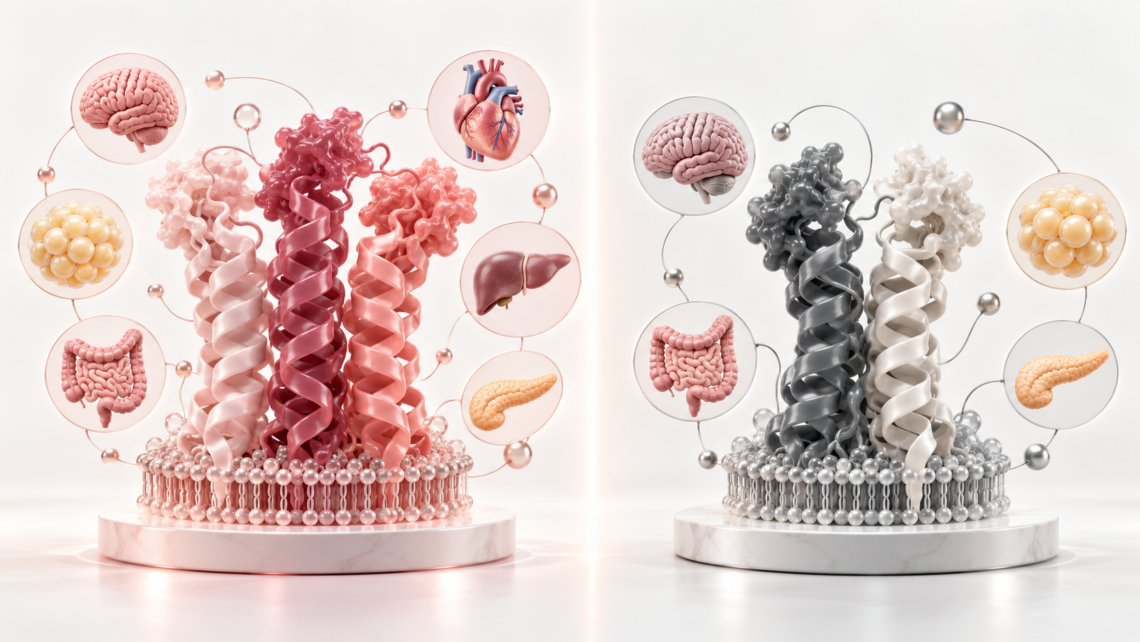
Retatrutide and tirzepatide are not the same medicine. Tirzepatide activates two hormone receptors—GIP and GLP-1—and is FDA approved for specific uses. Retatrutide activates GIP, GLP-1 and glucagon receptors and remains investigational. Although separate trials have reported substantial average weight reduction with both compounds, those results cannot establish which is better because a completed head-to-head comparison is not yet available.
Last reviewed: October 25, 2026. This article is educational and does not recommend a treatment or provide dosing instructions.
Retatrutide vs Tirzepatide at a Glance
| Feature | Retatrutide | Tirzepatide |
|---|---|---|
| Receptor targets | GIP, GLP-1 and glucagon | GIP and GLP-1 |
| Development status | Investigational; Phase 3 evidence available | FDA-approved medicine with post-approval data |
| U.S. approval | Not FDA approved as of October 25, 2026 | Approved under brand-specific indications and labeling |
| Evidence used in this comparison | TRIUMPH-1 and earlier retatrutide trials | SURMOUNT-1 and FDA prescribing information |
| Common trial adverse events | Primarily gastrointestinal | Primarily gastrointestinal |
How Do Their Mechanisms Differ?
Tirzepatide is a dual agonist. It selectively activates receptors for glucose-dependent insulinotropic polypeptide (GIP) and glucagon-like peptide-1 (GLP-1). These pathways influence glucose-dependent insulin secretion, appetite, food intake and other metabolic processes.
Retatrutide adds glucagon-receptor activity to GIP and GLP-1 activity. Researchers are studying whether this third pathway can produce additional effects on energy use and metabolism. The presence of another receptor target does not automatically make a medicine safer, more effective or appropriate for a particular person. Those conclusions require controlled comparative research.
What Did the Major Weight-Management Trials Report?
Retatrutide in TRIUMPH-1
TRIUMPH-1 was an 80-week, randomized Phase 3 trial in adults with obesity who did not have diabetes. The mean percentage change in body weight was reported as −17.6% with 4 mg, −23.7% with 9 mg and −25.0% with 12 mg, compared with −3.9% with placebo.
Tirzepatide in SURMOUNT-1
SURMOUNT-1 was a 72-week, randomized Phase 3 trial in adults with obesity or overweight and at least one related complication, without diabetes. Mean weight changes were −15.0% with 5 mg, −19.5% with 10 mg and −20.9% with 15 mg, compared with −3.1% with placebo.
Has Retatrutide Been Compared Directly With Tirzepatide?
A direct Phase 3 study, TRIUMPH-5, is designed to compare retatrutide with tirzepatide in adults with obesity. ClinicalTrials.gov lists the study as active and not recruiting, with primary completion expected after the date of this review. Until peer-reviewed results are available, claims that one medicine has “won” a direct comparison are premature.
How Do Their Side Effects Compare?
Gastrointestinal symptoms—particularly nausea, diarrhea, vomiting and constipation—have been the most common adverse effects in trials of both medicines. For both compounds, digestive events have often appeared during dose escalation and have usually been mild to moderate.
The comparison is not symmetrical. Tirzepatide has FDA-approved prescribing information describing established warnings, contraindications and post-approval safety information. Retatrutide does not yet have an approved label, and its safety profile is still being defined through trials and regulatory review.
For a focused review of investigational safety findings, read Retatrutide Side Effects: What Clinical Trials Have Reported.
What Is the FDA Status of Each Medicine?
Tirzepatide: FDA-approved tirzepatide products are available under specific brand names and approved indications. Approval applies to the labeled product, manufacturing standards, strength and use—not to every product marketed with the same ingredient name.
Retatrutide: Retatrutide is not FDA approved. The FDA states that it cannot be used in compounding under federal law and has warned about unapproved products marketed directly to consumers. Eli Lilly states that authentic retatrutide is legally available only through its clinical trials while development continues.
Which Is Better: Retatrutide or Tirzepatide?
Current evidence cannot support a simple “better” answer. Tirzepatide has the advantage of completed regulatory review, approved labeling and broader real-world experience. Retatrutide has produced notable results in Phase 3 research, but it remains investigational and its benefit-risk profile has not been approved by regulators.
For an individual considering an approved treatment, medical history, current medications, contraindications, tolerability and treatment goals matter more than comparing headline percentages from separate trials. That decision belongs with a licensed healthcare professional.
Frequently Asked Questions
Is retatrutide the same as tirzepatide?
No. They are different molecules with different receptor targets and regulatory statuses. Tirzepatide targets GIP and GLP-1 receptors; retatrutide targets GIP, GLP-1 and glucagon receptors.
Is retatrutide stronger than tirzepatide?
Separate trials reported different average outcomes, but they were not designed as a direct comparison. “Stronger” is not a scientifically reliable conclusion until head-to-head evidence is available and fully reviewed.
Are both medicines FDA approved?
No. Tirzepatide has FDA-approved products and indications. Retatrutide remains investigational and is not FDA approved as of October 25, 2026.
Do they cause the same side effects?
Both trial programs commonly reported gastrointestinal events. However, approved tirzepatide has a formal prescribing label, while retatrutide’s complete safety profile is still being evaluated.
Can compounded retatrutide be substituted for tirzepatide?
No. The FDA says retatrutide cannot be used in compounding under federal law. An unapproved online product should not be treated as a substitute for an FDA-approved medicine.