
Glutathione is an antioxidant that the human body makes naturally, but the proven biological importance of glutathione is not the same as proof that every glutathione supplement provides a health benefit. Small human trials have produced mixed results on whether oral supplements raise glutathione levels, and evidence for broad claims such as “detox,” anti-aging, weight loss or disease prevention remains limited.
Last reviewed: October 25, 2026. This article is educational and is not medical advice. It does not provide dosing, injection or treatment instructions.
What Is Glutathione and What Does It Do?
Glutathione is a tripeptide made from three amino acids: cysteine, glutamate and glycine. It exists throughout the body and participates in antioxidant defense, redox signaling and enzyme reactions that help process certain compounds.
One of its best-known roles is helping neutralize reactive molecules and supporting the recycling of other antioxidants. Glutathione also participates in glutathione-S-transferase reactions, which help make some substances easier for the body to process and eliminate.
These essential physiological roles explain why researchers measure glutathione in health and disease. They do not prove that taking extra glutathione improves outcomes in a healthy person.
What Glutathione Benefits Are Supported by Research?
1. Glutathione is central to the body’s antioxidant system
This is the strongest and least controversial statement. Glutathione made inside the body helps maintain cellular redox balance and supports enzymes that respond to oxidative stress. This is a normal biological function, not a claim that a supplement treats a disease.
2. Some oral supplements may raise measured glutathione levels
A six-month randomized, double-blind, placebo-controlled trial involving 54 healthy, nonsmoking adults reported increases in glutathione levels in several blood and cellular measurements with oral supplementation. The size of the study was modest, and biomarker changes were the primary focus.
A separate four-week randomized trial in 40 healthy adults found no significant changes in glutathione status or systemic oxidative-stress biomarkers. Differences in duration, formulation, study size and measurement methods may help explain why results are inconsistent.
3. Formulation may affect absorption, but clinical importance is uncertain
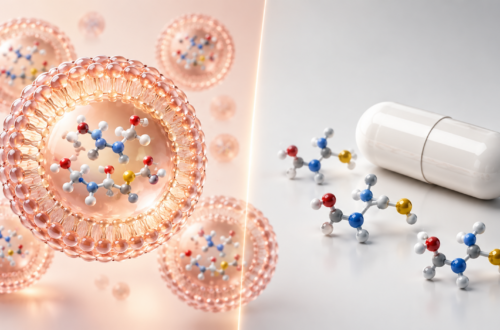
Recent small pharmacokinetic studies have compared standard, liposomal, micellar and orally dissolving formulations. Some have reported differences in blood exposure or glutathione measurements. However, better absorption does not necessarily establish a meaningful health benefit, and results from one branded formulation cannot automatically be applied to every product.
| Claim | Current evidence | Practical interpretation |
|---|---|---|
| Supports antioxidant processes | Well-established biological role for glutathione made in the body. | Does not prove a supplement improves health outcomes. |
| Raises glutathione levels | Mixed results from small controlled studies. | Effects may depend on formulation, duration and the person studied. |
| Improves skin tone | Several small studies report changes in melanin measurements; evidence and long-term safety remain limited. | Not a basis for unsafe IV or unverified products. |
| Causes weight loss or “detoxes” the body | No reliable evidence supports broad marketing claims. | Avoid guaranteed or disease-treatment claims. |
Does Glutathione Help With Skin Brightening?
Some small randomized trials have reported reductions in melanin measurements after oral glutathione, and a 2024 systematic review identified possible effects in selected studies. Important limitations include small sample sizes, short follow-up, different formulations and inconsistent outcome measures.
These findings do not establish universal effectiveness, long-term safety or an appropriate regimen. They also do not support injectable glutathione for cosmetic use. Claims promising dramatic or permanent skin-lightening results go beyond the available evidence.
Does Glutathione Support “Detox” or Weight Loss?
Glutathione participates in normal enzyme pathways, but “detox” is often used as an undefined marketing term. The liver, kidneys, lungs and digestive system continuously process and eliminate substances. Evidence does not support the claim that a glutathione product generally “flushes toxins” from a healthy body.
Glutathione is also not an established weight-loss supplement. Research into oxidative stress and metabolism does not demonstrate that taking glutathione produces clinically meaningful fat loss. Articles or advertisements making guaranteed weight-loss claims should be treated cautiously.
Are Glutathione Supplements Safe?
Safety depends on the route, formulation, product quality, medical history and intended use. Oral supplements have been associated mainly with gastrointestinal effects in available assessments, but long-term evidence is limited. Dietary supplements are not reviewed by the FDA in the same way as approved medicines before sale.
Important warning about injectable glutathione
Injectable products carry different and potentially more serious risks than oral supplements. In August 2026, the FDA reported adverse events in at least 30 patients who received compounded IV glutathione made with dietary-supplement-grade material. Reported events included fever, chills, pain, dizziness, signs of shock and sepsis-like symptoms, and some patients were hospitalized. The FDA emphasized that dietary-supplement-grade ingredients are not appropriate for making injectable drugs.
In October 2026, the FDA posted a nationwide recall notice for specific compounded glutathione injection lots because of potential elevated endotoxin levels. This is a current safety issue, not a theoretical concern. Do not assume that an injectable product is sterile, appropriate or safe because it is described as “wellness,” “research grade” or “compounded.”
How to Evaluate Glutathione Claims
- Separate the body’s natural glutathione functions from claims about a commercial product.
- Look for human controlled trials, not only laboratory or animal research.
- Check whether the study measured a biomarker or a meaningful health outcome.
- Confirm the exact formulation and route; oral and injectable products are not interchangeable.
- Be cautious with guaranteed “detox,” anti-aging, skin-lightening or weight-loss promises.
- Check current FDA warnings and recall information before trusting safety claims.
Frequently Asked Questions About Glutathione Benefits
What is glutathione’s main role?
Glutathione is part of the body’s antioxidant and redox systems. It helps cells manage reactive molecules and participates in enzyme reactions that process certain compounds.
Do oral glutathione supplements work?
Evidence is mixed. Some small studies found increases in glutathione biomarkers, while another controlled trial found no significant change. More research is needed to determine whether changes translate into meaningful health benefits.
Is glutathione proven for weight loss?
No. Glutathione is not an established weight-loss treatment, and evidence does not support guaranteed fat-loss claims.
Is IV glutathione safer or more effective than oral glutathione?
No such general conclusion is supported. Injectable products introduce distinct sterility, contamination, formulation and adverse-event risks. Recent FDA alerts and recalls involving compounded glutathione injections underscore those risks.
Does a higher glutathione blood level prove a health benefit?
No. A biomarker change can help researchers understand absorption or biology, but it does not automatically demonstrate improved symptoms, disease prevention or longer life.
Sources and Further Reading
- Randomized trial of oral glutathione supplementation and body glutathione stores
- Randomized trial of oral glutathione and oxidative-stress biomarkers
- Systematic review of glutathione for skin pigmentation and melasma
- FDA: Warning about dietary-supplement-grade glutathione in injectables
- FDA: 2026 compounded glutathione recall notice