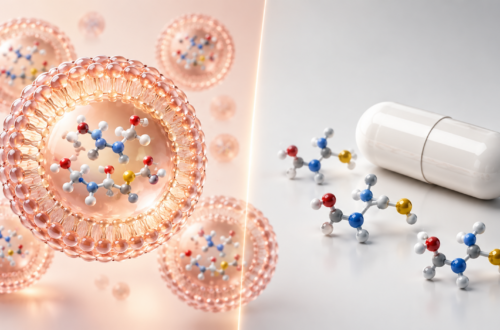
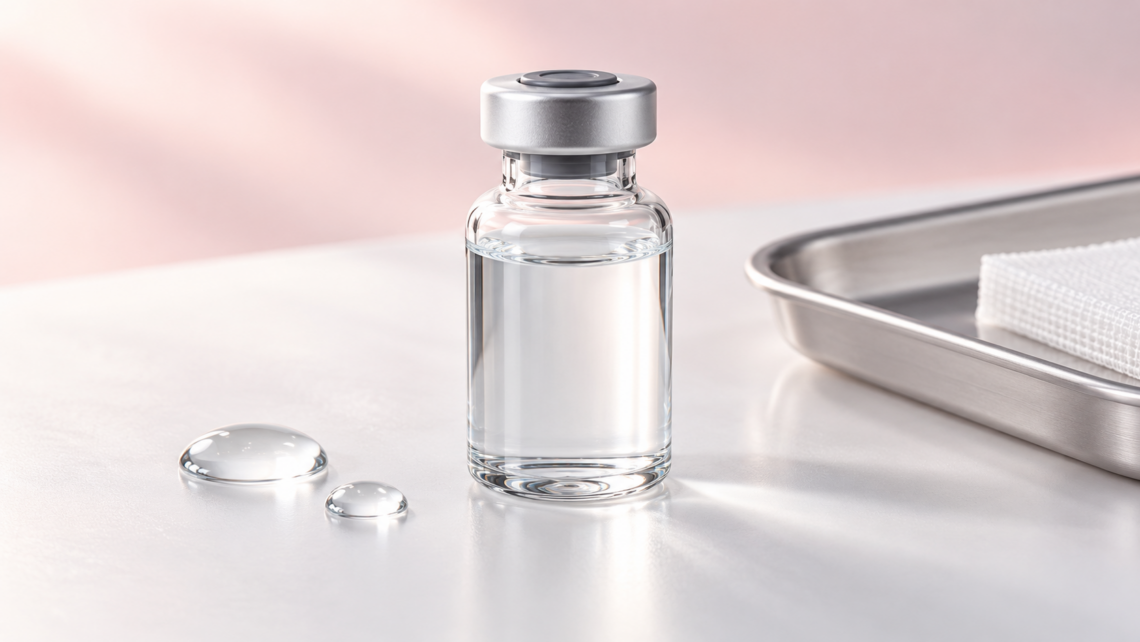
Bacteriostatic Water for Injection is sterile water containing a small amount of an antimicrobial preservative—usually benzyl alcohol. It is supplied in a multi-dose container and is intended only as a diluent for compatible injectable medications when the medication’s approved instructions specify its use.
What Is Bacteriostatic Water?
Bacteriostatic Water for Injection, USP is a sterile, nonpyrogenic preparation of Water for Injection with an antimicrobial preservative. The preservative helps limit bacterial growth after the stopper has been entered, allowing the product to be supplied as a multi-dose vial.
Common 30 mL U.S. vials contain 0.9% benzyl alcohol, equal to 9 mg/mL. Some labeled presentations contain 1.1%, so the exact concentration should always be confirmed on the package. The term “bacteriostatic” means the preservative inhibits bacterial growth; it does not guarantee that a contaminated vial is safe.
What Is Bacteriostatic Water Used For?
Its labeled purpose is to dilute or dissolve compatible drugs for injection. The correct diluent depends on the medication, concentration, route and manufacturer’s instructions. Bacteriostatic water is not automatically appropriate for every injectable product.
It should not be treated as:
- a medication with an active therapeutic effect;
- a general-purpose source of sterile water;
- a fluid-replacement product;
- a substitute for saline, Sterile Water for Injection or another specified diluent; or
- proof that an unapproved online product is safe to inject.
This article intentionally does not provide mixing, reconstitution or injection instructions. Those directions must come from the approved medication label and a licensed healthcare professional.
Bacteriostatic Water vs. Sterile Water for Injection
The main difference is the preservative and container use:
| Feature | Bacteriostatic Water for Injection | Sterile Water for Injection |
|---|---|---|
| Preservative | Contains an antimicrobial preservative, commonly benzyl alcohol. | Does not contain an antimicrobial preservative. |
| Typical container | Multi-dose vial. | Often supplied for single-dose use. |
| Neonatal use | Contraindicated because of benzyl alcohol toxicity risk. | Preservative-free products may be required when the medication label permits. |
The two products are not interchangeable simply because both contain water. The drug manufacturer’s instructions determine which diluent, volume and handling requirements apply.
Does Bacteriostatic Water Need Refrigeration?
Many current U.S. labels direct unopened bacteriostatic water to be stored at controlled room temperature, typically 20°C to 25°C (68°F to 77°F). Refrigeration should not be assumed unless the specific manufacturer’s label says to refrigerate after opening.
Storage directions can vary by product, and online advice should not override the package insert. Check the exact label for temperature, light protection, expiration and post-opening instructions. Do not use a vial if the seal is damaged, the solution is discolored or cloudy, or particles are visible.
How Long Is a Multi-Dose Vial Usable After Opening?
The manufacturer’s instructions and applicable clinical policy should be followed. CDC injection-safety guidance says an opened multi-dose vial should generally be dated and discarded within 28 days unless the manufacturer specifies a different opened-vial date. The beyond-use date must never exceed the original expiration date.
A preservative reduces some bacterial growth but does not provide complete protection from contamination. Multi-dose vials should be prepared in a clean medication area, and a new sterile needle and syringe must be used for every access in clinical practice.
Can Bacteriostatic Water Be Injected by Itself?
No. Bacteriostatic Water for Injection is a diluent and should not be injected by itself. Product labeling warns that intravenous administration without an added solute may cause hemolysis because plain water is not isotonic with blood.
The label also states that it should not be used for fluid replacement. Any injectable preparation must have an appropriate final concentration and route based on the drug manufacturer’s directions and professional clinical judgment.
Why Is Bacteriostatic Water Not for Neonates?
Benzyl alcohol has been associated with serious toxicity in neonates, including premature and low-birth-weight infants. For that reason, U.S. labels carry a prominent warning that bacteriostatic water is not for use in neonates.
When a preservative-free diluent is required for a newborn, the correct product must be selected by qualified healthcare professionals according to the medication label. This warning is specific and should not be minimized or treated as a general preference.
What Does “Bacteriostatic Water for Peptides” Mean?
Online sellers often use the phrase “bacteriostatic water for peptides,” but the phrase is not a guarantee of regulatory approval, sterility or suitability. A peptide product and its diluent must each be evaluated independently.
A label such as “research use only” does not make a product appropriate for human injection. Do not use bacteriostatic water to prepare an unapproved substance based on instructions from a seller, influencer or discussion forum.
Frequently Asked Questions
Is bacteriostatic water the same as saline?
No. Bacteriostatic water contains water plus a preservative, while saline contains sodium chloride at a specified concentration. They are not interchangeable unless a medication’s instructions explicitly allow the alternative.
Is bacteriostatic water sterile?
A properly manufactured and sealed product labeled Bacteriostatic Water for Injection, USP is sterile and nonpyrogenic when released. Sterility can be lost through damage, improper storage or unsafe handling.
Does benzyl alcohol kill every microorganism?
No. The preservative helps inhibit bacterial growth but does not sterilize a contaminated vial and does not provide complete protection from bacteria or viruses.
Can bacteriostatic water be used for any peptide?
No. Compatibility and preparation requirements depend on the specific approved medication or authorized research protocol. Some products require a different diluent.
Can a vial be used after its expiration date?
No. Follow both the manufacturer’s expiration date and any shorter beyond-use date that applies after the vial is first accessed.
The Bottom Line
Bacteriostatic water is a prescription diluent with a specific composition and purpose. It is useful only when the compatible medication’s instructions call for it. Storage, vial access and disposal should follow the exact label and professional injection-safety standards.
For more evidence-aware research education, explore Fit Lab and the latest Melina Fitness articles.
Medical disclaimer: This article is for general education only and does not provide reconstitution, injection or medical instructions. Consult a pharmacist or licensed healthcare professional and follow the approved medication label.
Last reviewed: October 25, 2026.